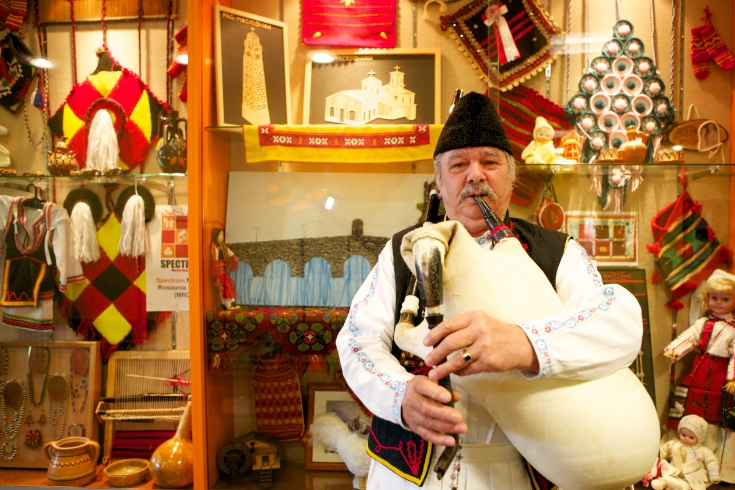
FAR from the Scottish Highlands, Thomastown resident Riste Butrakoski is a bagpipe master.
He plays haunting folk songs on the traditional Macedonian bagpipes, known as the gajda, made from lamb skin with a chantra flute-like part for the melody. In 1970, a new life beckoned in Australia, and Mr Butrakoski and his bagpipes migrated.
The 68-year-old shared his passion at Macedonian Independence Day celebrations at Thomastown Library last week, organised by the Spectrum Migrant Resource Centre. Spokeswoman Jagoda Koteska said the City of Whittlesea has one of the highest concentrations of Macedonian-born migrants, being home to about 10,000 of the 40,000 in Australia.
“Most Macedonians arrived in Australia after World War II, with limited English and sometimes lacking literacy skills in their native language,” she said. “The Independence Day celebration is an important occasion for them to share their wealth of knowledge about a different time and place while feeling welcomed and appreciated.”
She said the Macedonian pipes were more melodious and produced gentler sounds than Scottish pipes which produce much higher notes.
“When Macedonians were leaving their homeland to come to Australia they were farewelled by bagpipe music. Sadly, the tradition in Australia is dying out as most of the players are older than 60 and there are only a handful left.”
–