SIPPING vodka lychee cocktails on a balcony overlooking the Mediterranean Sea is not an image I’d readily associate with Beirut, the city known for its bullet-holed buildings and crumbling concrete, with a population living in constant fear of attack.
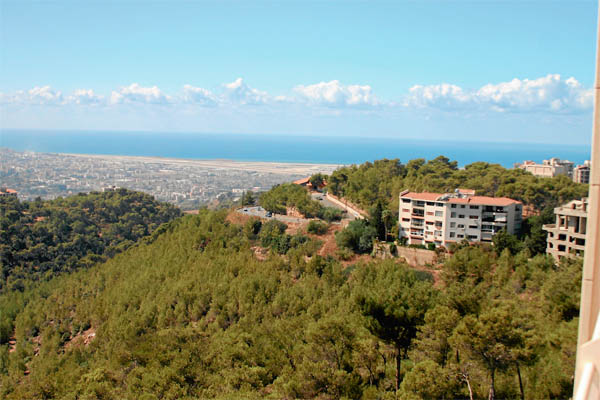
Yet here we are on the wide balcony of a spacious three-bedroom, sixth floor apartment that looks down on a lush green valley towards the Mediterranean, doing just that.
We are here, with our eight-year-old, because his godfather is based in Beirut for a year. We’ve decided to pass through for a visit on our way to see the Nabatean marvel of Petra in Jordan and read a book while floating on the Dead Sea.
What we discover, after several of those cocktails (vanilla vodka with a couple of canned lychees, some of the syrup they soak in, and a sharp twist of lime) is a very European city with wide boulevards, vibrant al fresco dining, and stores dedicated to just about every designer label you can think of.
And bling. Bling shrieks out at you from the attire of women, the chests of men, and the shopfronts. Bling is king and godpa has advised us to bring our shiniest outfits for nights out in Beirut, which parties like there’s no tomorrow. Precisely because there might not be.
We are prepared. What would stand out as over-dressed and over the top in a Melbourne club comes across as understated in a Beirut music house, where vodka is ordered by the bottle by both men and women.
It’s no wonder that Beirut has a reputation for being the ultimate party town.
There’s nothing like the likelihood of sudden death to give urgency to life, and this is the spirited way of living everywhere we look during our week-long visit, despite the ubiquitous and slightly menacing presence of heavily armed young men in uniform.
Beirut’s city centre has been bombed and rebuilt so many times that the life that thrives within it is a testament to resilience and endless hope.
The drivers, however, seem to treat life more lightly. We see motorists heading down a wrong lane just to beat heavy traffic; we see two children standing on the front seat in a car, their heads sticking out above the open rooftop, with a smiling dad at the wheel; we witness little regard for speed limits.
We swerve away from many instances of what we’d call suicidal driving as we head out of the city a few days later in search of a beach spot near the historic port of Byblos about 45 kilometres north of Beirut.
The best beaches in Lebanon have been privatised. It is mind-boggling that ordinary people cannot simply walk down to the beach for a swim in any of the best sandy stretches along the coast.
Beach clubs are the go. You pay about $US30 to enjoy a private strip of beach as well as swimming pools, cafes and verdant lawns at any of the private clubs. Pay extra and you get a day bed, complete with bedside service, on the sand.
After a swim and sunset drink at one of these clubs, we wander through the old cobblestone-paved Byblos souk known for its seafood, open-air bars and restaurants, and shisha water pipes with apple or grape tobacco that seem to be the way to top off a good meal.
A few days later we head to a visual surprise called Baalbek, a couple of hours’ drive from Beirut through the Bekaa Valley.
Baalbek, a Roman colony that became known as Heliopolis or City of the Sun when the Greeks arrived in 331 BC, contains Lebanon’s greatest Roman treasure.
Monumental columns reach for the sky amid some of the world’s best preserved Roman edifices that include temples to Jupiter, Bacchus and Venus, plus Mercury nearby.
We walk around the sacrificial altar, conjuring images of rousing rituals that must have taken place when pilgrims gathered to worship their gods a long time ago.
We spend hours wandering around in awe at the detail and scale of the area. Reluctant to leave, we head for lunch at a third-floor restaurant with a clear view of the ruins. Before we can even look at the menus, endless small plates of fresh mezze arrive at the long table until there is no room left.
We can’t complain. It’s the best Lebanese food we’ve tasted anywhere in Australia or the Middle East.
As we drive back to Beirut at sunset, satisfied on many levels, we pass a big sign that reads Road to Damascus. That, sadly, is one road no one will be driving crazily along for quite some time.