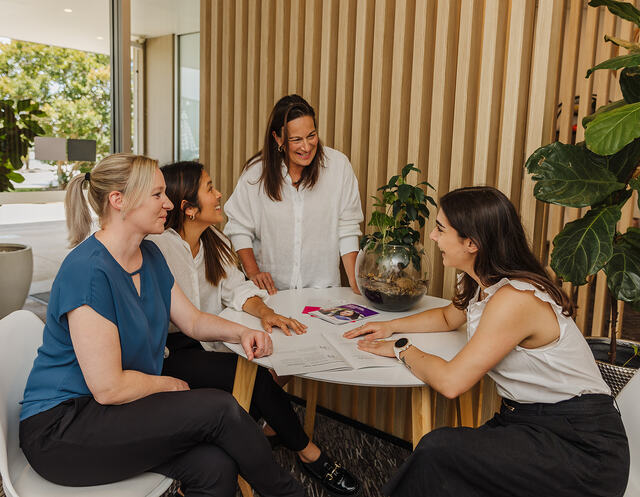
Melbourne mum and physio Alex Lopes is arming women with ‘taboo’ knowledge around pregnancy and birth.
“It’s not talked about enough,” she said.
“Modern science can’t protect us from potential trauma during childbirth; things can go wrong.”
Alex knows this first-hand.
The director at Altona North’s Pelvic Health Melbourne worked as a sports physiotherapist before a traumatic birth ‘ripped (her) in two’, causing bladder, bowel, and prolapse issues.
“There’s a journey of feeling disfigured, feeling damaged,” she said.
“I did not feel supported in my recovery so I retrained in this field.
“A lot of physios have gone into this field because of their own childbirth experiences – some from very positive experiences, others less so.
“After my own experience, I wanted to create a safe space for women in my community to be looked after.”
This was the impetus behind Pelvic Health Melbourne, which has evolved to offer pelvic health services to men, women, kids, and all genders.
Alex became the National Chair of the Australian Physiotherapy Association’s Women’s, Men’s, and Pelvic Health Group.
During her term she was passionate about establishing a consistent national physiotherapy training pathway, which has now been developed and rolled out across Australia.
She’s has run post-birth education sessions for 10 years, reaching out to community health centres, working with maternal child health nurses and helping women to understand the birth risks and their rights and choices.
Alex hosts free Body After Baby events, which include ultrasounds for participants, and her presentation is available on the Pelvic Health Melbourne website under ‘pregnancy services’.
“This class has been based on filling in the gaps I’ve seen in the pregnancy and postnatal education healthcare space,” she said.
“I wish we could get together and develop a national online education program so that we have consistent comprehensive education to all parents across Australia.”
She turns to humour to share her message; her aim is to normalise the language around pelvic health concerns.
The good news? We’re getting more comfortable talking about birth injuries, bladder, bowel prolapse, and intimate concerns.
“I’m really hopeful for the next generation,” Alex said.
“My friends, in their fifties? I can still see them squirm.”
Alex said most event attendees had already given birth and she hoped to see more attend prenatally so they could be better prepared.
“I don’t use fear tactics – it’s about putting it in perspective, saying ‘these are things to be aware of’,” she said.
“They tend to cope so much better with things that may not have gone to plan if they’ve been informed.”
She covers episiotomies, epidurals, forceps, suction, caesareans, pushing and all after-birth care, which is often missed.
“The birth is only one day and we want to make it as efficient as possible,” she said.
The post-birth complications, though, can last a lot longer.
One of the complications can be pelvic organ prolapse. Alex said 50 percent of women would develop an anatomical prolapse over their lifetime, but it might never have any impact.
“Only 23 percent will develop symptoms,” she said.
What is a prolapse? Your pelvic floor muscles support your organs from below.
Throughout pregnancy and during birth the ligaments supporting the organs can stretch and the organs – the bladder, bowel, or uterus – can fall into the vaginal space.
Prolapses are usually felt as bulge or heaviness, not pain.
Having a prolapse and increased vaginal laxity can “throw your sense of identity as a sexual being”.
“But there is hope,” Alex said.
“We look at how to reduce your symptoms.
“See a pelvic health physio for any symptoms that persist.
“As a general rule, if you’ve got persistent leakage, bowel or pain complaints after three months, see someone.
“In an ideal world, pelvic health physios would see every woman at six weeks post-birth.”
She said seeking help put women in a vulnerable position, but that it was a less intimidating prospect after birth.
“You’ve lost a little bit of the prudishness,” she laughed.
“You’re a little bit more open to people looking than you were before having kids.
“If you go into a space and you know that’s all they do, you feel safe.”
She often hears, ‘Wow, I wish I had come in earlier’ and ‘I felt so heard, so understood’.
Alex said that in the ‘old days’ and in other cultures it was common for women to have 40 days of confinement post-birth.
“We’ve lost our way, caring for our women,” she said.
“You’re left to fend for yourself.
“So many women struggle.
“You’re still recovering from passive whole-body trauma and then you’re sleep-deprived and trying to cook, clean, and do everything else.”
Body After Baby also covers breastfeeding and attachment, particularly blocked ducts and lymphatic drainage.
Alex is a strong advocate for teaching women to feed lying down.
She said it was ‘everything’ in the 1940s but fell out of favour with the advent of bottle feeding.
“The muscles of the pelvic floor are stretched to three times their normal length and suffer microscopic tears,” she said.
“The only way to rest is lying down, not sitting.
“I guarantee you women suffer back and shoulder pain from feeding upright.
“I haven’t had any woman who feeds lying down and didn’t enjoy it.”