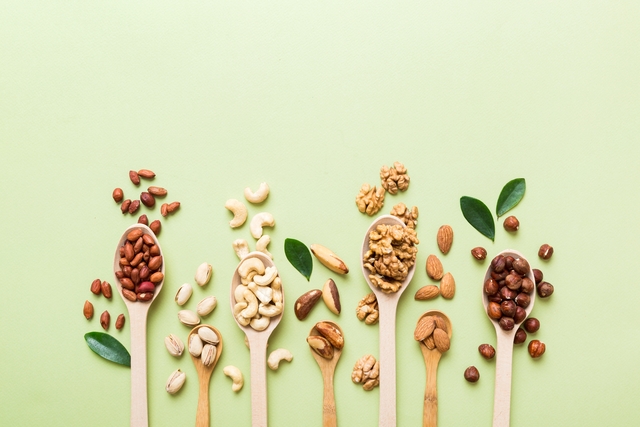
Regular consumption of nuts is associated with maintaining a healthy lifespan, new research from a Monash University-led team found.
Published in the Journal Age and Ageing, the researchers said the findings may help guide older individuals and their health professionals in making dietary choices that can support health in older age, including in those whose diet quality may not be optimal.
The study involved 9,916 adults aged over 70 years, who reported on their usual diet as part of the *ASPREE Longitudinal Study of Older Persons (ALSOP) sub-study.
Those who reported frequent consumption of nuts, including every day or several times a day, regardless of the type or form of nut, lived longer without dementia or persistent disability, compared to those who never or infrequently consumed nuts.
First author Holly Wild, a PhD candidate and lecturer from the Monash University School of Public Health and Preventive Medicine, said that nuts were a good source of protein, micronutrients, unsaturated fats, fibre and energy, but whole nuts can be difficult to eat for those with poor oral health or chewing difficulties.
“Our study was able to account for poor oral health and other foods that people usually ate, and after adjusting for these and other factors, eating nuts remained positively associated with a healthy lifespan in later life. Nuts can be a good choice for a snack or as part of a meal, even if your diet might not be optimal in other ways,” Ms Wild said.
“If you are wanting to incorporate more nuts into your diet, nuts are available in multiple different forms in supermarkets these days, including whole nuts, chopped or crushed nuts, nuts meals, and nut butters or pastes. The latter options may be much more accessible to those with oral health issues, and chopped nuts can be added to salads, cereals and smoothies.
“However, we do recommend keeping salted nuts, and candied and chocolate covered nuts to a minimum.”
The current Australian Dietary Guidelines suggest that adults should be consuming 30 grams of nuts, which is equivalent to 1/3 of a cup or a small handful, or approximately two tablespoons of nut butter on most days of the week, though previous research has reported that Australian adults over 65 years only average between 4-4.6 grams per day.
“What 30 grams of nuts looks like depends on the type of nut, but typically a ‘handful’ is equivalent to around 25 almonds, 10 walnuts or 40 peanuts,” Ms Wild said.
“Choosing a mixture of nuts means you get the benefits of the varying amounts of nutrients found in different types of nuts. Nuts taste best and have the highest nutritional content when fresh, so store in an airtight container in a cool, dark place to maintain freshness.
“Nuts are a great way to incorporate protein and nutrients into our diet in a more sustainable way. For this reason, nut consumption has been recommended by leading scientists as part of the Eat Lancet Commission report for planetary health.”