For people who are socially isolated, culturally diverse or part of the LGBTQIA+ community, finding a space where you feel safe and welcomed can be a challenge. Courtney Black discovers how neighbourhood houses and other service organisations are working to change that.
When people think of a safe space, they might imagine comfort or security. But for people who are socially isolated, culturally diverse or part of the LGBTQIA+ community, safety can be shaped by far more than just four walls.
A new report by Neighbourhood Houses Victoria (NHV), titled Safe and Welcoming Community Spaces, reveals what matters most to these groups, and what determines whether someone walks through the door of a community space, or turns away.
NHV president Keir Paterson said a key first step in creating a safe space is implementing visible signs of inclusion.
“We looked into what cultural and linguistically diverse (CALD) people find welcoming in a space and it can be something really simple like having the word ‘welcome’ in different languages,” he said.
“They walk into a space and they know immediately that this is somewhere that’s accepting of them and their culture.”
The report found that visual signs of inclusion made many cohorts of diverse people feel safe and comfortable when entering a space.
“Some cohorts in the community might be carers, or neurodiverse people, or they might have lived experience of social isolation… it is important they feel welcome,” Mr Keir said.
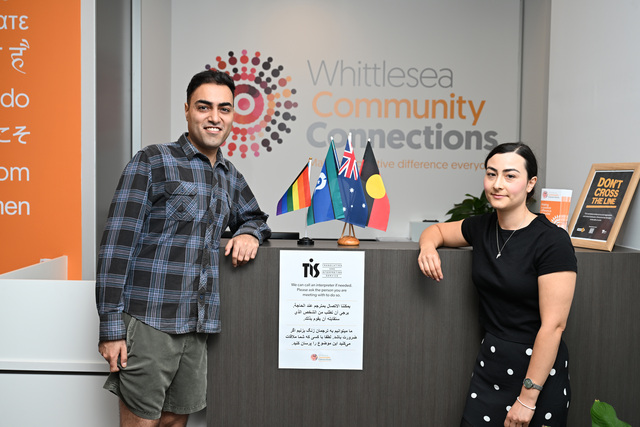
Whittlesea Community Connections (WCC) quality coordinator, Anas Qishta said visual inclusion is significant in safe spaces, but it is important that this is not tokenistic.
“There are things organisations can do like a ‘welcome here’ sticker or a pride flag or a trans flag to help people feel welcome,” he said.
“It’s even more important that the safety and risk mechanisms behind those are actually in place.”
In the report, participants emphasised that the culture of an organisation was more important in shaping their sense of safety than visual cues.
Mr Qishta said the community services sector was shifting from focusing on safe spaces to creating affirmative ones.
“The general sentiment is that a safe space without affirmation is encouraging neutrality,” he said.
WCC hosts rainbow support groups at local high schools, which he said acts as an affirming space for LGBTQIA+ youth.
He said when young people see tangible examples of lived experiences they can relate to, it helps them feel seen and connected to staff.
“They know straight away whether or not people are going to be okay with who they are as a person,” he said.
“Perhaps there will be a staff member in the group who is from a multicultural or migrant background and is also queer-identifying themselves … that really helps with affirmation.”
He said when direct representation was not possible, it was important that the content shown to students reflected their identities.
“There is power in representation … for example we show them examples of people in media who are gender diverse which really bridges the gap.”
In the report, privacy also emerged as a key concern beyond visual inclusion and affirmation. Mr Qishta said confidentiality is essential in creating safe spaces for diverse young people.
“We create an autonomous, student-led space for young people … our role is to give them the tools to do so safely.”
He said his hope for the future is to see more casual drop-in spaces for youth.
“Our students are lacking … long-term access, it takes a lot of time to build that rapport before all that work is in some ways lost.
“That’s the first thing that needs to happen, creating those spaces where young people from different groups can actually come in and hang out.”
The report found that there is a desire for casual drop-in spaces for more than just LGBTQIA+ people but also seniors, CALD and socially isolated people who often cited increased hesitation in participating in formal, structured programs.
Mr Paterson said there is an overall lack of drop-in spaces, and it is difficult to deliver this without further support.
“People told us they’d really like spaces where they can just drop in, have a seat, have a coffee and catch up with someone,” Mr Paterson said.
“If a neighbourhood house is owned by council, that means working with council to see how [drop-in spaces] could be implemented and whether funding is available.”
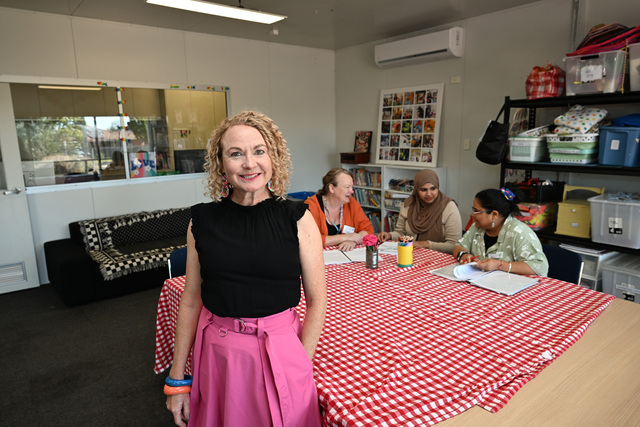
Creating an informal environment was important to Thomastown Neighbourhood House manager Liz Skitch when developing her new community hub.
“There are so many barriers to so many other spaces … to go into a coffee shop you might have to buy something … in another space you face discrimination,” Ms Skitch said.
“We allow walk-ins, people don’t even have to book online because bookings can be a barrier,” she said.
Socially isolated groups consistently felt negatively about formal protocols in community spaces, such as reporting to an office or signing in, as it reminded them of institutional settings, the report stated.
The report recommended community spaces create an informal atmosphere instead, with simple visuals like an open front door, couches, colourful artwork or garden beds to encourage people to enter.
Ms Skitch said she creates familiarity and comfortability through consistent programming.
“Our development model is about providing the community with what they want … once we know a program works we keep it.”
She said most programs at TNH run at the same time every week, with some operating for more than five years without schedule changes.
“It’s reassuring for people to know it’s on at the same time every week.”
Ms Skitch said programs would continue even if attendance numbers were low, or if a volunteer was unavailable.
“The worst thing is when people turn up and an activity is not on.
“If a volunteer is sick, I’ll run the program myself … it’s about quality, not quantity.”
Mr Paterson said the report is an important step to making spaces safer, but that there is more work to be done.
“We’re always trying to make sure that each neighbourhood house is responsive to their communities… but as a sector, we need to evolve and we get better at meeting the needs of specific cohorts,” he said.