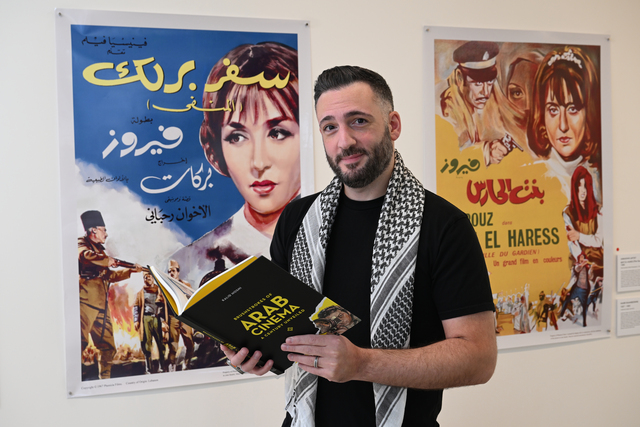
A vibrant and thought-provoking celebration of Arab cinema’s visual history is drawing strong interest at a local Melbourne gallery, where over 100 people packed the launch night of Brushstrokes of Arab Cinema: A Century Unveiled.
The exhibition by designer and artist Kalid Hosni runs until June 6, and coincides with the release of his companion book of the same name.
Endorsed by Omar Sharif Jr and acclaimed Egyptian actress Naglaa Fathi, the book sold over 50 copies in its first week and is now stocked at Readings and Metropolis Bookshop.
The project began as a deeply personal passion for Hosni, who has spent over 15 years collecting and digitally restoring film posters.
“I’ve always been especially interested in the painted posters from the Arab world,” Mr Hosni said.
“Many of these works were created by unknown artists and never properly archived or preserved…this is my way of reconnecting those memories and giving this overlooked art form the recognition it deserves.”
The exhibition showcases 40 restored posters capturing pivotal moments in Arab cinema– from Egypt’s golden age to the vibrant contributions of Lebanon and Syria.
“It wasn’t about simply picking famous films,” Mr Hosni explained.
“Some posters are iconic, especially those featuring legendary singers like Umm Kulthum and Fairuz. Others highlight lesser-known films that deserve more recognition.”
While the films remain accessible, Mr Hosni believes the posters hold unique cultural significance.
“The posters are more than promotional materials– they’re cultural artefacts,” Mr Hosni said.
Arab cinema, he added, played a powerful role in his upbringing and hopes the exhibition inspires deeper curiosity.
“For my family, watching old Egyptian or Lebanese films wasn’t just entertainment– it was connection.”
“I want to break the stereotype that Arab cinema is somehow limited or conservative. During its golden years, it was incredibly progressive–bold, glamorous and globally competitive,”
“More audiences are discovering the diversity and depth of Arab storytelling, beyond what’s been shown in mainstream Western media.”