Clinicians from Northern Health have joined forces with Australian colleagues to provide life-changing education and support to the Mongolian medical community.
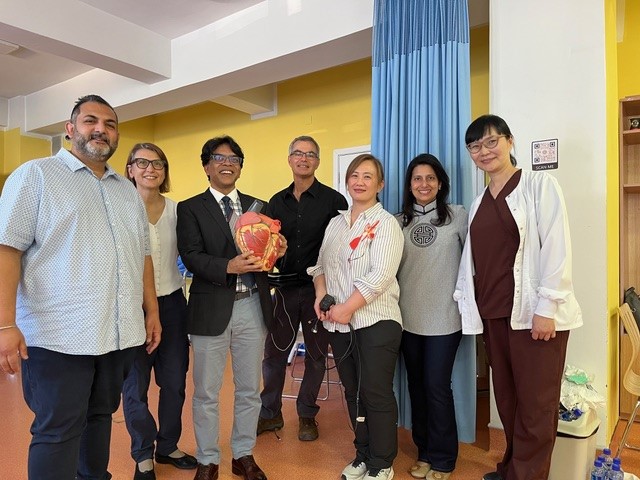
In June, 18 Australian faculty members, including 11 from Northern Health, travelled to Ulaanbaatar to participate in the annual Mongolian Society of Anesthesiologists (MSA) seminar hosted in collaboration with the Australian Society of Anaesthesists (ASA).
Northern Health staff gave expert workshops on cardiac investigations, neuro-anaesthesia, high-risk obstetric anaesthesia, echocardiography, and machine troubleshooting, while also leading simulation-based training for 30 faculty and students, focusing on adult learning, feedback, and psychological safety. The team further supported rural hospital visits and donated vital equipment, including ultrasound machines, capnography lines, and laryngeal mask airways.
The efforts were led by northern health’s Dr Amanda Baric, whose contributions to anaesthesia education and patient safety in Mongolia have earned her reputable recognition. Baric and her team focused on empowering local Mongolian doctors through hands-on training, shared knowledge and enduring partnerships.
“We have been able to teach some fundamentals of anaesthesia, pain medicine and critical care for anaesthesia doctors and trainees and that has made anaesthesia safer in Mongolia,” Dr Baric said.
The partnership between Northern health and Mongolia has been built over two decades of collaboration with the MSA, beginning in 2001 when Professor David Pescod attended the 40th anniversary meeting of the MSA and formed a close working relationship with then president Dr Ganbold Lundeg.
Over the years, this collaboration has grown through the dedicated efforts of clinicians. Dr Amanda Baric first visited Mongolia in 2006, helping Professor Pescod deliver training and starting conversations about the potential for the advancement of anaesthesia training.
“I joined David to help with obstetric anaesthesia teaching in 2006, and we decided to make a long-term educational commitment to establish a modern training program,” Dr Baric said.
“Mongolia is a poster child for improvement in global health and the Northern has supported its doctors, midwives, and educators to form strong bonds with their colleagues to contribute to this improvement,” she said.