Home » News » Breast cancer program welcomed

Breast cancer program welcomed

Breast Cancer Network Australia (BCNA) Australia’s leading voice for people affected by breast cancer, has welcomed last week’s announcement by Health and Aged Care Minister Mark Butler of a review of Australia’s BreastScreen program.

BCNA was an active participant in the Roadmap to Optimising Screening in Australia (ROSA) project, which recommended the review. The outcomes of the ROSA project were released last week.

A BCNA trained Consumer Representative from the Seat at the Table program was part of the ROSA project’s Expert Advisory Group, representing BCNA’s collective position on behalf of its entire network of people with a lived experience of breast cancer.

The Federal Government contracted Cancer Council Australia (CCA) in early 2018 to undertake the ROSA project to examine the evidence and options for more risk-based, personalised approaches for the early detection of asymptomatic breast cancer in Australia.

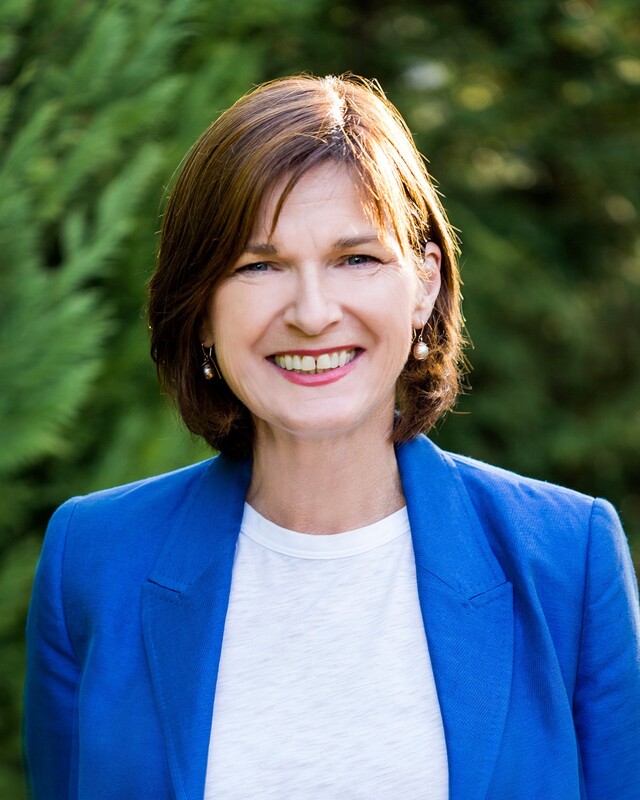
BCNA Director of Policy, Advocacy & Support Services, Vicki Durston, said improving outcomes through early detection is a key strategic priority for BCNA because we know when breast cancer is caught early it results in better treatment outcomes and survival rates.

However, Ms Durston said Australia’s screening rates have not seen significant improvement in over a decade and currently only about half of the eligible population are screened through BreastScreen.

“We want to see the Federal Government lead implementation of risk stratified breast screening in Australia,”she said.

Risk stratification sees people screened based on their individual risk of breast cancer, rather than a one-size-fits all approach to the population.

Approaches to risk stratification can take into account things such as family history of cancer, breast density, and Aboriginal and Torres Strait islander status to ensure people are screened at a frequency and with a method that is appropriate to their risk of cancer.

“There are many disparities in screening across Australia. We know only some states and territories tell women if they have dense breasts,” she said.

“Aboriginal and Torres Strait Islander screening rates are also considerably lower than for non-indigenous Australians, which leads to much poorer breast cancer survival rates for these groups.”

BCNA is already working alongside several state and territories as they implement approaches like reporting of breast density. Breast density (also called mammographic density) is a term used to describe how breasts look on a mammogram. People with dense breasts are at increased risk of having cancers missed.

“The evidence is there, how we diagnose and treat breast cancer is evolving. With the upcoming release of the Australian Cancer Plan, the time is now to consider how we best screen people for breast cancer.”

Digital Editions


  • New measles exposure sites

    New measles exposure sites

    The Department of Health has listed four measles exposure sites in the northern suburbs since 28 January. The most recent exposure occurred at Northend Medical…

More News

  • Australian Open smashes attendance records

    Australian Open smashes attendance records

    This year’s Australian Open was officially the most attended on record. More than 1.368 million tennis fans flocked to Melbourne Park for the 2026 tournament, easily surpassing last year’s record…

  • Walk to Work Day coming

    Walk to Work Day coming

    The Pedestrian Council of Australia has announced a new initiative for Walk to Work Day, partnering with the Black Dog Institute to highlight the mental health benefits of walking. The…

  • Aussie icons head west

    Aussie icons head west

    Powerhouse vocalist Casey Donovan will join a star-studded season of entertainment at The Clocktower Centre in a year that will also bring some of our country’s best-loved and most enduring…

  • ‘Too long’: green light for more GPs to tackle ADHD

    ‘Too long’: green light for more GPs to tackle ADHD

    Australians will soon find it much smoother to be diagnosed and treated for attention deficit hyperactivity disorder. Victoria has joined a growing list of states to give the green light…

  • Cancer researchers supported

    Cancer researchers supported

    The next generation of cancer research leaders are being supported through a four-year cancer research fellowship program, supported by the state government. Health Minister Mary-Anne Thomas has announced the inaugural…

  • Duffin headed to Abers

    Duffin headed to Abers

    Aberfeldie has boosted its list with another former AFLW player for the Essendon District Football League women’s premier division season. After announcing the signing of former North Melbourne player Tahni…

  • Who are these Australians?

    Who are these Australians?

    The iconic ‘Three Well-Known Australians’ has made its way to Melbourne’s west for a limited time. The work, painted by Martin Shaw in 1982, depicts three figures – a blue,…

  • Support Sweethearts for HeartKids

    Support Sweethearts for HeartKids

    Every day in Australia, eight babies are born with a childhood-onset heart disease (CoHD), and this February HeartKids is calling on Australians to help support these children and their families…

  • Power bill relief a bonus

    Power bill relief a bonus

    The state government used one of the hottest days in Victoria’s history to urge households to apply for its power saving bonus program before it ends on 31 March. Before…

  • Help for heart kids

    Help for heart kids

    Every day in Australia, eight babies are born with a childhood-onset heart disease (CoHD), and this February HeartKids is calling on Australians to help support these children and their families…