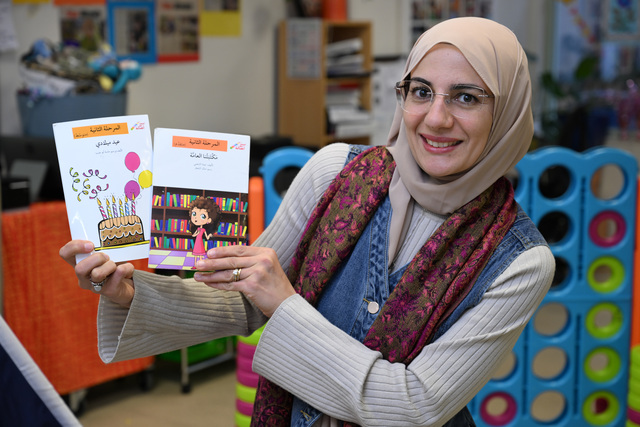
Each week, the Thomastown Neighbourhood House transforms into a haven of warmth, companionship, and Arabic lullabies.
At the heart of this quiet transformation is Zara Al-Hasany, Founder and Director of Jeeran Community Services, whose tireless efforts to uplift Arabic-speaking refugee and migrant families have not gone unnoticed.
In recognition of her commitment to the local community, Ms Al-Hasany has been nominated for the 2025 Scullin Volunteer Awards.
Jeeran, meaning “neighbours” in Arabic, is the first Arabic-language playgroup listed in the City of Whittlesea’s directory.
But to the families who attend, it’s much more than that.
“As a community support worker, I saw first-hand the barriers Arabic-speaking mothers were facing — language, isolation, even trauma,” Zara Al-Hasany said.
“Jeeran was created because these families needed a culturally safe space to connect, to feel seen and supported.”
Now in its third year, the playgroup has grown from a handful of families to more than 70.
Sessions are regularly booked out.
“It’s a sign of how vital this space is,” Ms Al-Hasany said.
“There’s trust here, something that’s often missing for families who’ve fled conflict or are navigating a new country.”
The playgroup combines bilingual storytelling, craft, music and early learning activities that support both school readiness and cultural identity.
“Children thrive when they feel secure in their language and heritage,” Ms Al-Hasany said.
“And so do their parents.”
For many mothers, the playgroup is their first point of social contact since arriving in Australia.
“Some haven’t had a conversation outside their home in weeks. Here, they build friendships, confidence, and parenting skills in a space that respects who they are,” Ms Al-Hasany said.
And Jeeran continues to receive strong in-kind support from Thomastown Neighbourhood House, allowing it to remain free and accessible.
It also runs women’s wellbeing workshops, developed post-lockdown with Foundation House, to build mental health literacy and community resilience among Arabic-speaking refugee women.
Youth programs, like self-defence classes and excursions, further extend Jeeran’s mission.
Census data backs the urgency. Arabic is spoken at home by 9.3 per cent of Hume City residents, far above the state average of 1.8 percent.
“The need for culturally tailored services is enormous — and growing,” Ms Al-Hasany said.
She believes Jeeran’s grassroots model offers something unique.
“This isn’t a top-down service. It’s community members supporting one another. That’s where the healing begins, through language, culture, and connection.”