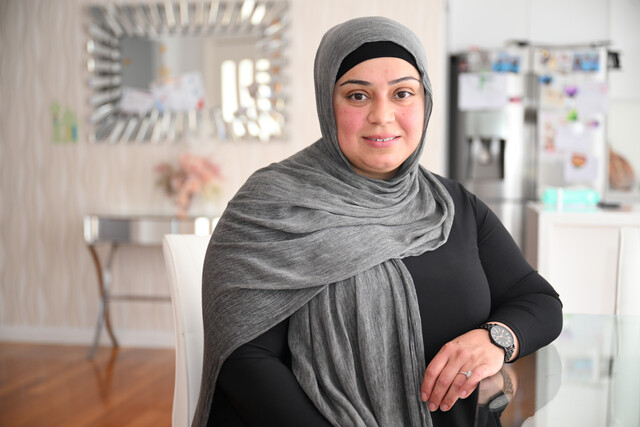
When she was 23 years old, Dallas Resident Eda Ozkoca received a life-saving liver transplant.
The now 36-year-old said she could not put into words how grateful she is for her organ donor and their family.
“I have always wanted to write to them but couldn’t put pen to paper, how could I?” Eda said.
“They’ve got my life back.”
Sunday, 16 November was DonateLife Thank You Day, a national day to acknowledge the generosity of organ and tissue donors, and their families.
Liz Sonntag, a spokeswoman from Donate Life Victoria said each year thousands of lives are saved and transformed through the generosity of organ donors.
Eda Ozkoca is one of almost twenty thousand Australians who have received life-saving organ transplants, according to DonateLife.
Eda was diagnosed with ulcerative colitis at 6 or 7 years old after being referred to the Melbourne Royal Children’s Hospital because of constant tummy pains and diarrhea.
“After diagnosis, I was dehydrated and malnutritioned from the drips, vitamins and fluids,” she said.
“At age 12 everything just tumbled when I copped a bug overseas, I was back at square one and worse than before,” she said.
“One day in year 9 my friends said to me ‘you look pale, you look yellow.’”
“I didn’t take much note of it… but when I got home and looked in the mirror, my eyes were lemon yellow,” she said.
The yellowness was due to a blockage in the bile duct, a major duct draining the liver, Eda said she had to have tubes down her throat to unblock it.
Bile duct inflammation occurs in around three per cent of patients with ulcerative colitis, according to the Crohn’s and Colitis Foundation.
“That went on for a few years until I got really really sick with the liver,” she said.
“I was at a Coles checkout and someone behind me said I looked like a walking dead body… I had black skin and yellow eyes.”
Eda said in 2011 she rushed to get married in her dream boat wedding even though she was so unwell.
“The next day we went to sign the papers [for a liver transplant] because I was at the end stages,” she said.
According to Austin Health, the average wait time for a liver transplant is eight to 12 months.
Eda said she had multiple surgeries after her wedding, first an operation to open and drain her bile duct, and then her first unsuccessful liver transplant.
“We couldn’t win,” she said.
16 months later, she had just been discharged from hospital, and was called to undergo her second liver transplant.
“I was cut open before they found Hepatitis-B in the donor liver,” she said.
After this second unsuccessful liver transplant, Eda was given three days to live if a healthy liver wasn’t found.
“On the third day, I remember word-for-word the doctor saying he found a red, bright, shiny liver,” Eda said.
“I woke up from the surgery pain-free, and had an instant colour change.”
“14 years on, every single day I wish I could have told [the donor family] how grateful I am for what my life has come to post-transplant.”
Eda said she is most grateful for being mother to her four children.
“That was my dream, to have kids, and I couldn’t have done it without [the donor],” she said.
Eda said the decision to donate organs falls back to the family, so potential organ donors should inform family members of their decision.
“It could happen to your loved ones, you never know,” she said.
Australians can register to be an organ donor at donatelife.gov.au or through MyGov.