Pelvic Organ Prolapse refers to any dropping or bulging of the pelvic organs – the bladder, uterus, or bowel – happening when there is a weakening in the supporting tissues and pelvic floor muscles that usually hold these organs in place.
Between 20–40 per cent of women will experience pelvic organ prolapse (POP) or urinary incontinence (UI) in their lifetime.
The first of its kind in an Australian public hospital, Sunshine Hospital recently opened the POPPY pessary clinic, where a physiotherapist-led team fits pessaries and manages patients’ ongoing care.
Hospital senior women’s health physiotherapist Kerry O’Sullivan was a driving force behind opening this clinic, and said that pelvic organ prolapses can happen across a wide range of ages.
“Generally, prolapse occurs when women get older after menopause, but it can occur in younger women after childbirth,” Ms O’Sullivan said.
She said the condition can be improved with conservative management, such as pelvic floor muscle exercise and lifestyle advice.
The condition is categorised by stages of advancement, but Ms O’Sullivan said it often does not follow a set pattern of progression.
“A lot of women worry that it’s just going to progress and get worse, but there are treatments and advice that can help so it doesn’t follow that pattern,” she said.
She said one of the barriers preventing women from seeking medical attention is a feeling of embarrassment about their symptoms.
“It’s such an intimate area of the body and women … find it quite uncomfortable to talk about or to make that appointment to see their GP to have an examination to have it checked,” she said.
“I think often women are just so busy caring for everyone else that they often put themselves last and put up with mild symptoms. It’s only when things get really uncomfortable that they’ll finally make that appointment.”
Ms O’Sullivan said she recommends visiting a GP as a “first port of call” for a check-up and diagnosis.
“The GP may then refer to a women’s health physiotherapist who provides expert advice on pelvic floor exercises and check that they are being performed correctly. A physiotherapist will also give advice around managing lifting, safe ways to exercise so that symptoms don’t get worse, and other good bladder and bowel habits to reduce bothersome symptoms,” she said.
“It’s important to see a women’s health physiotherapist who has extra training and skills in managing this condition and who can check the prolapse, rather than a general physiotherapist.”
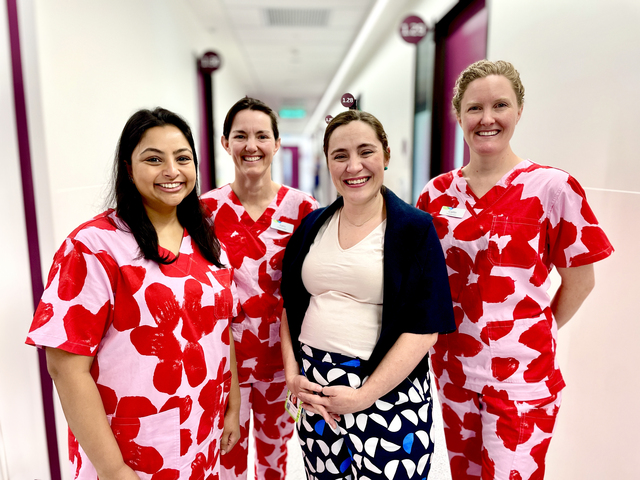
The team of three women’s health physiotherapists at the POPPY clinic at Sunshine Hospital fit and provide ongoing management and review of pessaries – small silicon devices that provides structural and instant support for the pelvic organs.
The clinic received a government grant towards training staff in fitting and reviewing pessaries.
Ms O’Sullivan said this public clinic has sped up the process of providing this treatment to women, as there was previously a larger waiting list, and increased affordability and accessibility of the treatment.
“Previously, this type of care was only provided by … gynaecologists, and women had to wait to access care. Our new clinic has improved access to pessary fitting,” Ms O’Sullivan said.
“Care in the private system is unaffordable for many women in the west,” she said.
She said a lot of the treatment is around providing support in using the devices.
“They take some time to get used to the idea that a foreign body’s inside the vagina. It can be fairly daunting and scary, but they can be so effective for women. Women do need support, time to ask questions, time to understand what a pessary involves, to understand the follow up – what’s normal and what’s not normal in terms of looking after it” she said.
The team developed pessary education information in the five most common languages other than English spoken among those who are treated at Western Health Hospitals – Vietnamese, Macedonian, Simplified Chinese, Burmese, and Arabic.
The clinic was selected as a finalist in the Department of Health’s Victorian Public Healthcare Awards’ Excellence in Women’s Health category.