
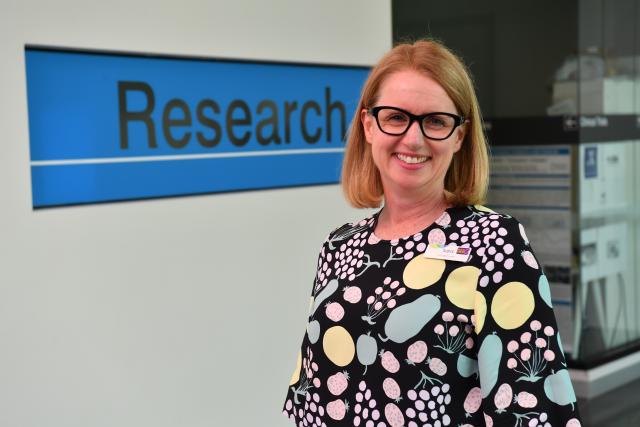

The COVID-19 pandemic extracted a profound toll on the psychological wellbeing of healthcare workers. Now, an Australian-first study undertaken by Western Health and Deakin University reveals the significant and persistent negative impact on the wellbeing of health professionals over a 22-month period. Hannah Hammoud explains.
The research, led by senior research fellow Dr Sara Holton from the Centre for Quality and Patient Safety Research-Western Health Partnership, delves into the experiences of 1,470 Australian clinicians. Through a series of surveys conducted at three critical junctures during the pandemic, the study measured feelings of depression, anxiety and stress.
Staff were asked to complete surveys across three timepoints during the pandemic (May-June 2020, October-December 2020 and November 2021-January 2022).
Key findings expose a stark reality – the proportion of healthcare workers reporting moderate to extreme symptoms of depression, anxiety, and stress surged from just more than one in 10 to approximately a third as the pandemic unfolded.
Dr Sara Holton noted that nurses, midwives and allied health staff bore a particularly heavy burden, reporting significantly worse psychological wellbeing than their doctor counterparts.
The intensified stress experienced by nurses and midwives could be attributed to their constant bedside presence, managing high-stress situations and prolonged exposure to patients infected with COVID-19.
“We think that this might be the case because these are the staff who are at the bedside all the time, and they are having the most contact with patients, whereas doctors have more limited face-to-face contact with patients,” explained Dr Holton.
“Nurses also had to wear a lot of personal protective equipment (PPE) during the pandemic, which also had an impact on them being able to communicate with patients. Things such as wearing a mask sometimes made it really hard to communicate with patients – and Western Health has a high proportion of patients who come from culturally and linguistically diverse backgrounds, English is not always their first language, and so the nurses spoke about their experience of having to try smile with their eyes and do a bit of pointing and gesturing to try get their messages across.”
The study also highlighted the disproportionate impact on allied health professionals, such as physiotherapists, psychologists, and social workers. As the hospital halted services, many staff were redeployed to unfamiliar areas, leading to increased feelings of anxiety and stress.
Yet, amidst the challenges, a positive insight emerged. The study revealed that healthcare workers living with school-aged children exhibited lower levels of depression and anxiety, suggesting that familial support acted as a protective factor for psychological wellbeing.
Dr Holton attributed this finding to the social support within households during a time of heightened stress.
“We think in fact it’s about social isolation, you weren’t living by yourself and there were other people at home. Perhaps that was an opportunity to debrief, talk about it, or an opportunity to hang out together when everyone was isolated,“ she said.
Dr Holton said the study also underscored the persistent challenges faced by healthcare workers on the frontlines, at a time where many in the wider community consider the pandemic to be in the past.
“Lots of people in the general community think that COVID-19 is over, but we’re still having high levels of patients in the hospital, and staff are still having to care for COVID-19 patients – for them the pandemic hasn’t really stopped yet,” she said.
Western Health executive director of nursing and midwifery Adjunct Professor Shane Crowe, who was also on the research team, said at the time Western Health managers were “very cognisant“ that it was the staff at bedsides that were the ones who were most affected.
“It wasn’t just because of their life at work, but these people also were as impacted as the rest of the population in terms of lockdown, restrictions, and the uncertainty of everything else that was occurring,“ professor Crowe said.
“These were the people who were at the frontlines who had huge amounts of uncertainty about the dangers associated with COVID-19, and whether they were going to be putting themselves at risk. But also, what a lot of our staff said was that they were most worried about bringing it home to their loved ones.“
This awareness informed wellness strategies and interventions to support frontline staff in managing their fears and frustrations. Professor Crowe detailed efforts to help staff positively navigate the challenges, acknowledging that despite ongoing efforts, the toll on the workforce persists with unresolved issues and lingering fatigue from the past few years.
“At the start, what we knew is that we didn’t know a lot about it. There was a mixture of good information and misinformation with COVID-19, particularly earlier on, and so we were trying to filter out what was good quality information versus what wasn’t,“ Professor Crowe explained, reflecting on the initial stages of the pandemic.
“In the beginning we knew that we needed to over communicate, so we did that. We set up robust communication channels for people to have things in writing to keep people abreast and on top of what was happening and why we’re doing what we’re doing.“
As the situation evolved, strategies were adapted to provide on-site psychologists, group debriefing sessions, and other support mechanisms.
However, Professor Crowe acknowledged the unrelenting demand on staff.
“As things got harder as time went on, we were able to adapt our strategies, but that being said, what we weren’t able to stop was the unrelenting demand that occurred on our staff at the time.“
Professor Crowe said longitudinal studies were a crucial tool for engaging with the workforce.
“The findings of the research have been used to directly inform the way health services support staff now and into the future,” he said.
The latest paper from the research team, which was published in the Australian Health Review Journal, found that hospital clinical staff would benefit from ongoing and continued wellbeing support during and after pandemic waves.
And the research team is not resting on its laurels. Plans are underway to continue collecting data in an effort to help unravel the long-term impacts of the pandemic on healthcare workers.